
Owning rental property in Florida can be a strong investment, but it also comes with legal responsibilities that cannot be ignored. For rental owners in Cape Coral, Fort Myers, and nearby Southwest Florida markets, small mistakes with notices, deposits, screening, or lease language can quickly turn into lost rent, delays, disputes, or legal exposure.
Rentify Property Management works with landlords who want to protect their properties, keep clean records, and avoid preventable compliance issues. Florida landlord laws are not something owners need to fear, but they do need to understand the basics before managing a rental on their own.
Key Takeaways
- Many eviction issues start with improper notice, so landlords need to understand timing, documentation, and legal procedure before filing.
- Security deposit mistakes can cost owners money, even when deductions are valid.
- Fair housing compliance affects advertising, tenant screening, application handling, and reasonable accommodation requests.
- Lease language matters, especially when Florida updates disclosure requirements or local rental rules change.
- Strong systems help landlords avoid common legal and operational mistakes before they become expensive problems.
Florida Landlord Laws Are Really About Process
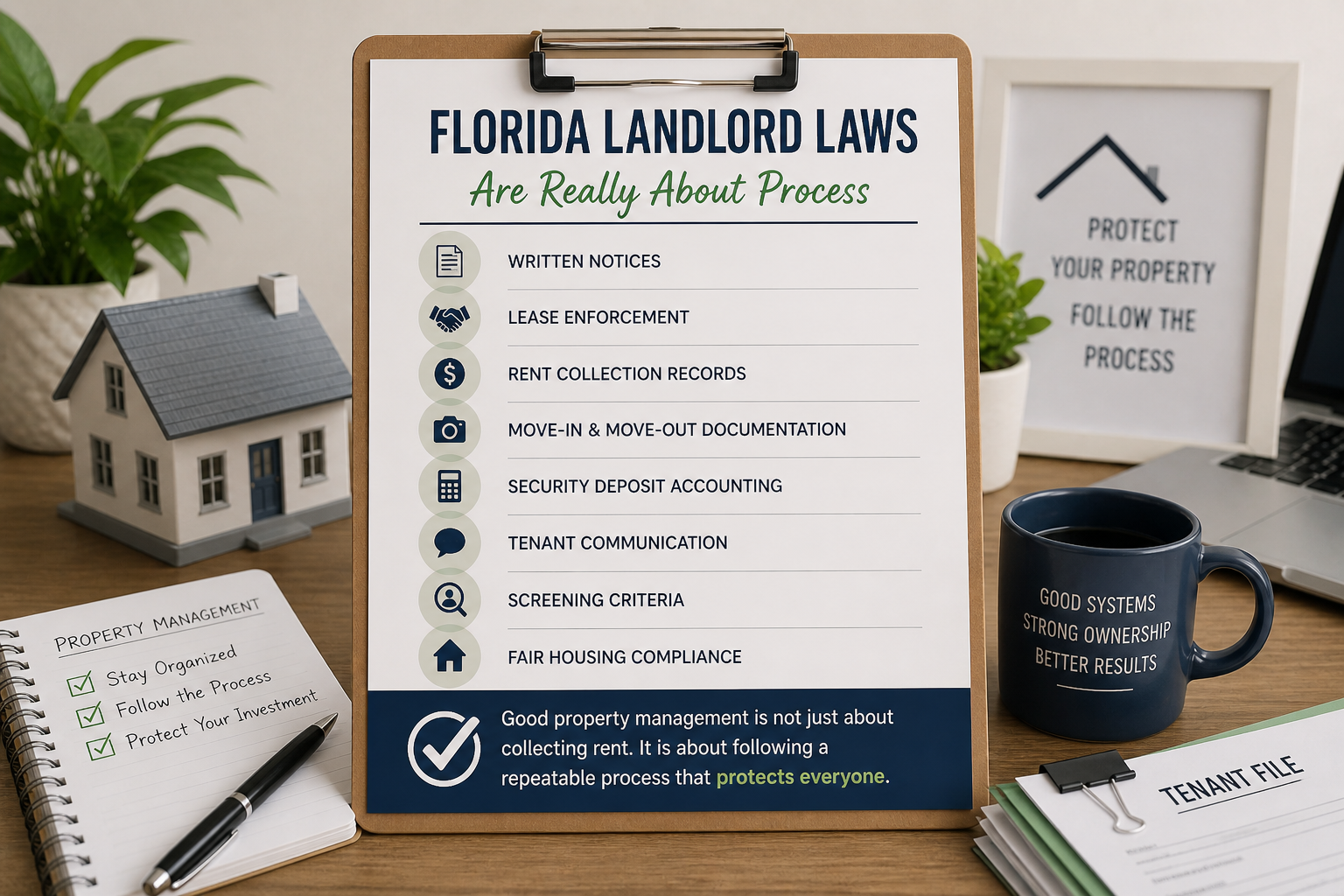 Most landlord problems do not happen because an owner is trying to break the law. They usually happen because the owner skips a step, uses the wrong form, misses a deadline, or handles a tenant issue too casually.
Florida rental property owners need to be consistent with:
- Written notices
- Lease enforcement
- Rent collection records
- Move-in and move-out documentation
- Security deposit accounting
- Tenant communication
- Screening criteria
- Fair housing compliance
Good property management is not just about collecting rent. It is about following a repeatable process that protects the owner, the tenant, and the property.
Eviction Rules Start Before the Eviction Is Filed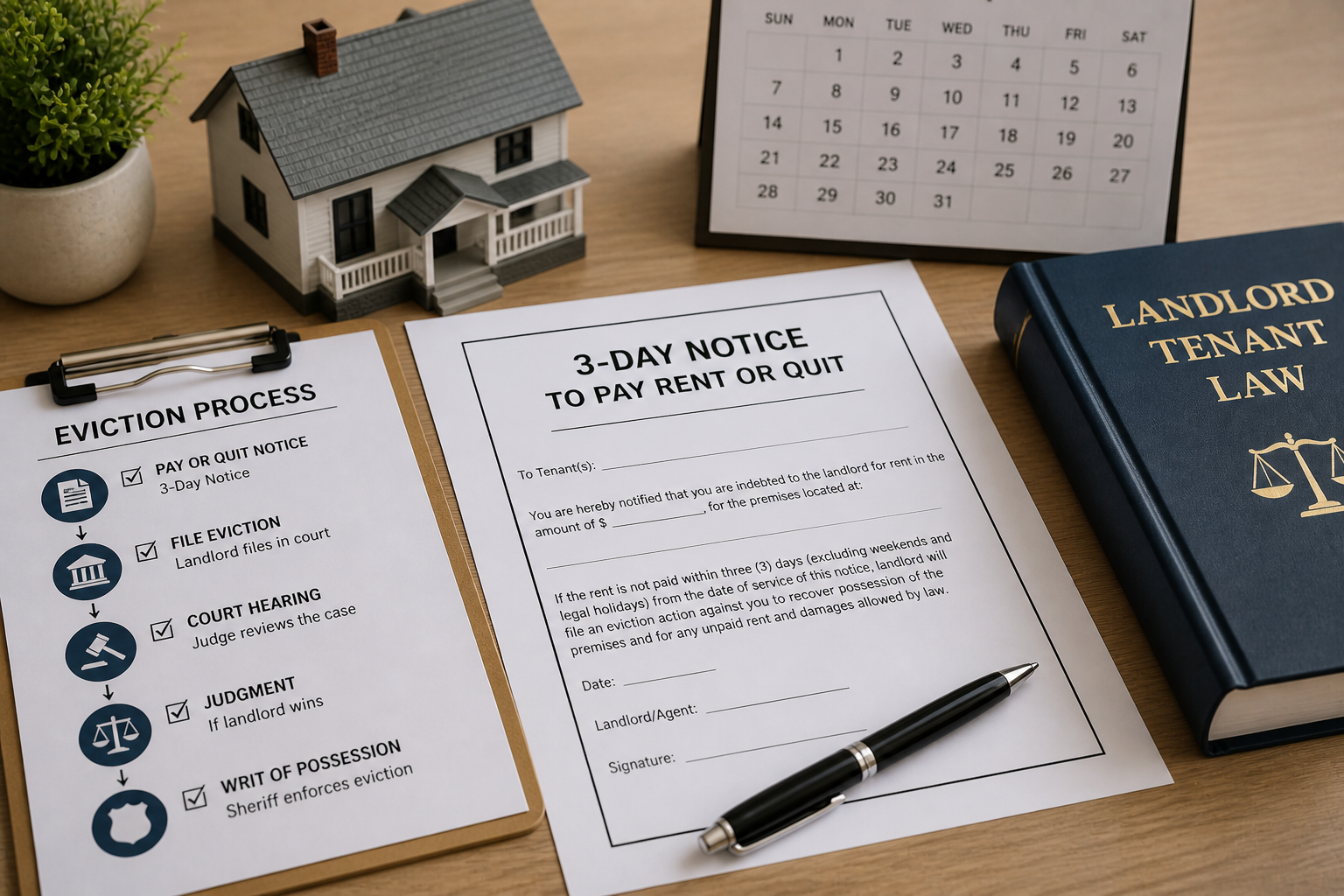
Eviction is one of the most sensitive areas of Florida landlord law. If a tenant does not pay rent, a landlord generally cannot jump straight to court. The first step is usually serving the proper notice.
For nonpayment of rent in Florida, landlords commonly use a 3-day notice. One important detail is that weekends and legal holidays should not be counted in that 3-day period. If the notice is calculated incorrectly, the eviction process can be delayed or challenged.
A clean eviction file should include:
- A signed lease
- A clear rent ledger
- Copies of all notices
- Proof of delivery or posting
- Communication records
- Documentation of unpaid rent or lease violations
Landlords should also avoid “self-help” actions, such as changing locks, shutting off utilities, or removing tenant belongings without legal authority. Even when the tenant is clearly behind on rent, the process still matters.
Owners dealing with unauthorized occupants or possession concerns should also understand how Florida handles squatters rights and adverse possession for landlords, since those situations require careful handling and proper documentation.
Security Deposits Must Be Handled Carefully
Security deposits are another area where landlords can lose money by missing a deadline or mishandling funds. A security deposit is not the landlord’s money to freely use during the lease. It is held to cover specific issues such as unpaid rent, tenant-caused damage, or other lease-allowed charges.
Florida landlords must follow rules for where deposits are held, how tenants are notified, and how claims are made after move-out. The general purpose of a security deposit is to protect the property owner against certain losses while still giving the tenant the right to receive any valid remaining balance back.
After a tenant moves out, landlords should complete the inspection quickly, document the condition of the property, gather invoices or estimates, and send any required notices within the proper timeframe. If a landlord intends to make a claim against the deposit, timing is especially important.
Strong move-out documentation should include:
- Date-stamped photos and videos
- A copy of the move-in condition report
- A written list of damages beyond normal wear and tear
- Vendor invoices or repair estimates
- A clear accounting of deductions
The biggest mistake is treating the deposit like a general repair fund. Normal wear and tear is different from tenant-caused damage, and owners need to be able to explain the difference with documentation.
Fair Housing Rules Apply to Every Step of Leasing
Fair housing compliance is not limited to large apartment communities. It applies to individual landlords, small rental owners, investors, and property managers.
Federal fair housing rules prohibit discrimination based on protected classes including race, color, national origin, religion, sex, familial status, and disability. Landlords need to be careful with rental ads, showing procedures, application standards, screening decisions, and tenant communication. Housing providers should understand the basic fair housing protections for renters before advertising a property or reviewing applications.
A fair housing issue can happen unintentionally. For example, using casual language like “perfect for a single professional” may create risk because it could be interpreted as discouraging families. Another common issue is mishandling a reasonable accommodation request from a tenant with a disability.
The safer approach is to use written screening criteria and apply them consistently to every applicant. That means owners should avoid making case-by-case exceptions based on “gut feeling.”
Tenant screening is one of the most important places to stay consistent. Rental owners can reduce risk by avoiding tenant screening mistakes that can cost thousands, especially when reviewing credit, income, rental history, and background information.
Rent Control, Rent Increases, and Local Rules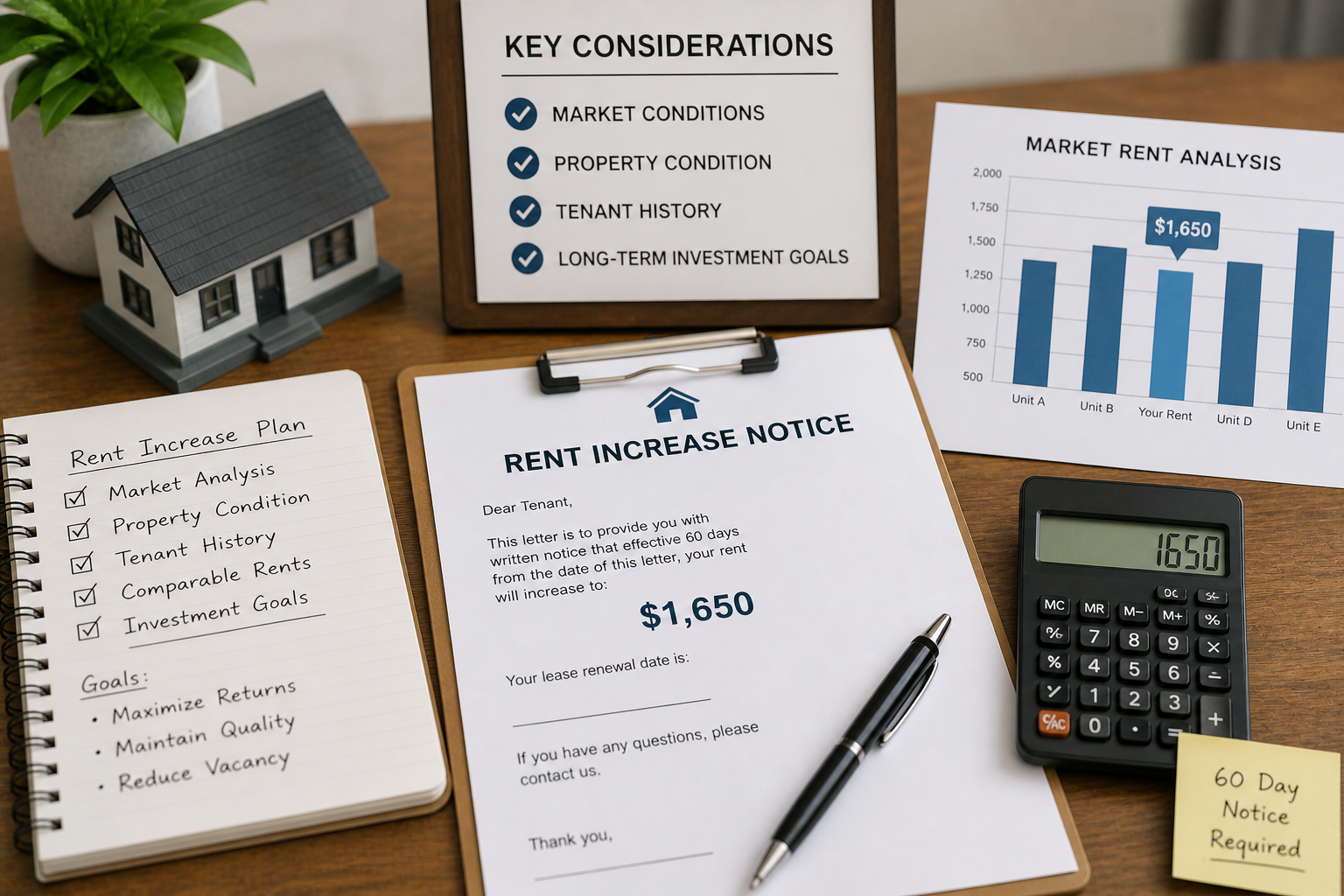
Florida does not currently operate like some states with broad rent control rules. However, that does not mean landlords can ignore rent increase procedures or lease renewal terms.
A rent increase should be handled professionally and in writing. The lease should explain how renewals work, when notice must be given, and what happens if the tenant does not agree to the new terms. Even when a rent increase is legally allowed, poor communication can damage the relationship and increase vacancy risk.
Owners should base rent decisions on market conditions, property condition, tenant history, and long-term investment goals. Raising rent too aggressively can create turnover. Keeping rent too low can reduce returns and limit the owner’s ability to maintain the property well.
Compliance Is Easier When the Property Is Managed Like a Business
Many legal issues come from informal habits. A landlord accepts late rent without documenting it. A repair request is handled through text with no record. A deposit deduction is made without photos. An applicant is denied without written criteria.
Those habits may seem harmless until there is a dispute.
Rental property owners should build systems around:
- Lease enforcement
- Maintenance tracking
- Tenant communication
- Accounting
- Inspections
- Renewals
- Legal notices
- Vendor records
Owners who want a stronger foundation should also avoid common landlord mistakes that lead to expensive problems, especially when managing without professional support.
Final Thoughts
Florida landlord laws are manageable when owners stay organized, use proper documentation, and follow the correct steps before problems escalate. Rentify Property Management helps rental owners protect their investments by keeping the day-to-day details, notices, deposits, leasing standards, and compliance pieces handled properly.
Legal note: This information is for general educational purposes only and should not be taken as legal advice. Florida landlord-tenant laws can change, and every situation is different. Rental property owners should consult a qualified Florida attorney before making legal decisions about evictions, lease terms, security deposits, or tenant disputes.
